
Brand Guidelines Template
A brand guidelines template records your logo rules, colours, fonts, and tone in one document, so every piece your business makes looks like the same brand.
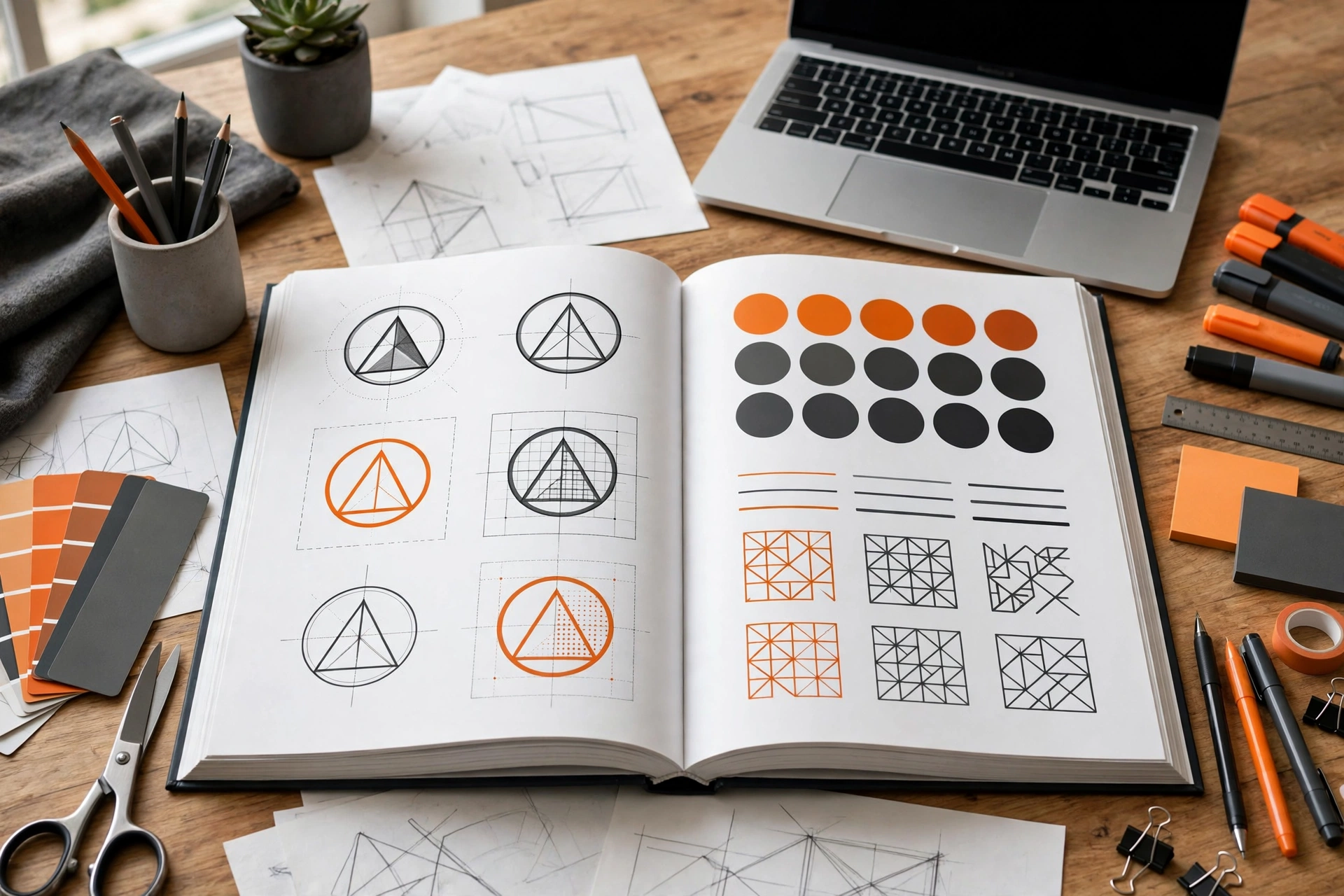
A brand guidelines template is a document that records how your brand looks, sounds, and behaves, so anyone who makes a piece for your business follows the same rules. It covers the logo rules, the colour palette, the typography, the tone of voice, the imagery, and the applications. This guide explains what a template includes, why a small business needs one, and how to use it.
What Is a Brand Guidelines Template?
A brand guidelines template is the starting document for your brand guidelines. Brand guidelines are the rules for how a brand looks, sounds, and behaves. A template gives you those rules in a ready structure: logo rules, colours, type, tone, imagery, and applications, each with a page of its own. You fill in your own logo, your own colours, and your own words.
Most small businesses need 15 to 30 pages, not a 100-page book. A template keeps it short: one page per rule, one example per rule. The big brand guidelines examples online show the NASA manual, the Apple rules, and the Spotify partner pages. Those are useful to study, and they are too long to copy. A small business template takes what those books do well and cuts the rest. Why does a small business need one at all?
Why Does a Small Business Need Brand Guidelines?
A small business needs brand guidelines because more than one person makes its materials. Your printer, your freelancer, your social media manager, and your future designer each make a piece, and each one guesses without a document to follow. The guidelines stop the guessing: the same colours, the same fonts, the same logo rules, on every piece.
Guidelines also protect the brand as it grows. A new channel, a new product, or a new hire each add a place where the brand must stay the same. A business with guidelines grows without drifting. A business without them changes a little with each new piece, until the card, the post, and the website look like 3 businesses. What does the template include?
What Does a Brand Guidelines Template Include?
A brand guidelines template includes 7 parts. Positioning: who you serve, what you promise, and why you are different. Logo rules: every version, clear space, minimum size, and examples of misuse. Colour palette: your colours in HEX for screen and CMYK for print. Typography: one font family for the name and one for the tagline. Tone of voice: three words you are, three you are not, and sample sentences. Imagery: the style of photos and graphics you use. Applications: the logo on a card, a post, a sign, and a mockup, so the rules show in real places.
Each part has one page and one example. A rule without an example is a guess. A logo rule shows the logo used right and the logo used wrong. A colour rule shows the palette on a post. A type rule shows the fonts at the sizes you use. The template is a working document, not a decoration. What do the logo rules look like?
What Do Logo Rules Look Like?
Logo rules name every version, the clear space, the minimum size, and the misuse list. The versions are the primary logo, the secondary logo, the icon, and the mono version in one colour. The logo mark is the symbol itself, and each variation keeps the same mark, the same colours, and the same type. A wordmark is the business name in a distinct typeface. A lettermark is the initials of the name. An icon is a symbol on its own.
Clear space is the empty area around the logo, measured from the mark itself. Minimum size is the smallest width the logo still reads at. The misuse list names what no one may do: stretch the mark, recolor it, crowd it, or set it below its minimum size. Each rule shows a right example and a wrong example, so the next person sees the line. How do the colour and type rules work?

How Do Colour and Type Rules Work?
Colour rules name each colour with its code, and type rules name each font with its size and weight. The colour palette lists each colour in HEX for screen and CMYK for print, because screen and print need different codes. A palette of 2 colours suits most small businesses. A third colour adds an accent, not a second idea. The rules name which colour is the main colour, which is the second colour, and where each one goes.
Typography rules name one font family for the name and one for the tagline, not two display fonts that fight each other. The rules name the sizes: the headline size, the body size, and the smallest size the tagline stays readable at. A vector file carries the logo, an SVG carries it for the website, and a PNG with a transparent background carries it for posts and documents. What do the tone rules cover?
What Do Tone of Voice Rules Cover?
Tone of voice rules name how the brand writes: the words it uses, the words it avoids, and the sentences it sounds like. Three words name what the brand is: plain, direct, helpful. Three words name what it is not: salesy, vague, loud. Sample sentences show the tone in use: a caption, a headline, and a reply to a customer.
Tone rules matter because words carry the brand as much as the logo does. A post with the right colours and the wrong words still feels like a different business. The guidelines record the tone next to the logo and the palette, so the words and the look stay the same. How does the Ammaar Designs template use these rules?
How Does the Ammaar Designs Brand Guidelines Template Work?
The Ammaar Designs brand guidelines template is the agency's own document, built from its own brand. The name Ammaar sits in orange, DESIGNS in black, in one font family. The orange is #E96632, the black is the brand's second colour, and the two colours carry the whole identity: logo, posts, website, and stationery all use the same pair.

The tone is plain and direct: short sentences, no filler, one idea per line. The imagery is real work: the agency's own designs, shown as proof, not as decoration. The applications show the logo on a business card, a social post, and a website header, so the rules show in real places. That is a brand guidelines template in practice: one document, 7 parts, each with an example. How do you use one?
How Do You Use a Brand Guidelines Template?
You use a template in 4 steps, in order. Step 1 is the fill-in. Write your positioning, your logo rules, your colours, your type, your tone, and your imagery into the template. Step 2 is the examples. Add one right example and one wrong example to each rule. Step 3 is the share. Give the document to everyone who makes a piece for your brand: printer, freelancer, social media manager, future designer. Step 4 is the update. Change the document when the brand changes, and share the new version the same day.
A template that sits in a drawer is not a guideline. A guideline works when the next person opens it before they start. The mockup is the test: place the logo on a card and a post, and check that each one follows the rules. What makes brand guidelines useless?
What Mistakes Make Brand Guidelines Useless?
Five mistakes, each with a fix. A 100-page book no one reads. Most small businesses need 15 to 30 pages, not a manual. The fix is one page per rule. Rules with no examples. A rule without a right and wrong example is a guess. The fix is one example per rule. Codes with no format. A colour with no HEX and no CMYK cannot be used on screen and print. The fix is both codes, on the same line. A document no one receives. Guidelines that sit with the owner help no one. The fix is the share: every person who makes a piece gets the document. A document that never updates. A brand that changes and a document that does not is a document that lies. The fix is the update, shared the same day.
Each mistake has the same cause: the document was built and then forgotten. Guidelines work when you use them, share them, and update them. Should you write them yourself or hire a designer?
Should You Write Brand Guidelines Yourself or Hire a Designer?
Three questions decide it: time, skill, and reach. Time: do you have days to write the rules, build the examples, and lay out the document? Skill: can you name the colours, the fonts, and the logo rules, or will you learn them? Reach: where must the guidelines work? If the brand only needs a one-page sheet for a printer, and you have time and a template, DIY is a real option. If the brand needs the full 7-part document, with the vector files and the mockups, a designer earns the fee.
The Identity Guidelines page shows the package and the files you receive. The Branding Cost Estimator tool shows what a branding scope includes before you book a call. Which route fits your business?
Questions, Answered
What is a brand guidelines template?
A brand guidelines template is the starting document for your brand guidelines. It gives you the rules in a ready structure: logo rules, colours, type, tone, imagery, and applications, each with a page of its own. You fill in your own logo, your own colours, and your own words.
How long should brand guidelines be?
Most small businesses need 15 to 30 pages, not a 100-page book. One page per rule, one example per rule. A business with fewer than 20 people needs a short document that the next person can read in one sitting.
What is the difference between brand guidelines and a brand style guide?
They are the same document. Brand guidelines, brand style guide, and brand book all name the rules for how a brand looks, sounds, and behaves. The names overlap, and one document can do all three jobs for a small business.
What files do brand guidelines include?
The guidelines record the logo rules, and the files carry the logo itself. Each logo version needs a vector file, an SVG, and a PNG with a transparent background. The vector file is the master your printer and your future designer edit.
Do I need brand guidelines if I already have a logo?
Yes, when more than one person makes materials for your brand. The guidelines give your printer, your freelancer, and your future designer the same colours, the same fonts, and the same logo rules.
What are good brand guidelines examples?
The best brand guidelines examples are short, specific, and explain their reasons. The NASA manual and the New York subway manual show how to build a system. Mailchimp and GOV.UK show how to write rules for words, not just logos. Study the examples, then write your own rules in a template.
What Should You Do Next?
Take the 7-part template and fill in your own brand. Write your positioning, your logo rules, your colours, your type, your tone, and your imagery, one page each. Add one right example and one wrong example to each rule. Share the document with everyone who makes a piece for your brand. The Identity Guidelines service page shows the package and the files you receive. Book a free strategy call and leave with a clear next step.
Read the Brand and Creative Guides next, for the logo system and the visual identity.
Ready for Brand Guidelines That Keep Your Brand Consistent?
Book a free strategy call. You leave with a clear next step, whether you hire us or not.
Book a Free Strategy Call