
Social Media Marketing Strategy That Brings You Customers
A strategy is a one-page plan, not a 40-slide deck. It names your goal, your customer, and your platforms, then tells you what to post and what to measure.

A social media marketing strategy is a one-page plan that names your goal, your customer, and your platforms. It sets what you post, how often you post, who answers messages, and which numbers you check each month. This guide builds that plan in an afternoon, then runs it for 90 days.
What Is a Social Media Marketing Strategy?
A social media marketing strategy is a written plan for how your business uses social media to reach a business goal. It answers seven questions: why are you on social media, who are you trying to reach, which platforms will you use, what will you post, how often will you post, who replies to comments and messages, and which numbers do you check each month. A strategy is not a content calendar. A calendar lists the posts. A strategy decides why those posts exist. A strategy fits on one page. A plan that needs 40 slides is a document, not a decision. The first decision is the goal. What goal should your strategy serve?
What Goal Should Your Strategy Serve?
Your strategy serves one business goal, not a follower count. A goal you can count sounds like 10 booked jobs a month, 50 enquiries a quarter, or 20 online sales a week. A follower count is not a goal. Followers who never buy are an audience, not a business. Pick one goal for the next 90 days. Two goals split the budget and the attention. One goal focuses both. Your goal decides the platforms, the posts, and the numbers you check. A goal of booked jobs points to Facebook and Instagram with a call to action. A goal of online sales points to Instagram shopping and Reels. The goal is set. Who is the customer it must reach?
Who Is Your Customer on Social Media?
Your customer is one person, described in one paragraph. That one person is your target audience, and every post speaks to them. Write their age, their work, their problem, and where they spend time online. A bakery customer is a parent in the same town who orders a cake for a birthday. A gym customer is a worker who trains before office hours. Your customer is not everyone. Everyone is no one. A post written for everyone says nothing to anyone. A post written for one person reads like it was written for them. Your customer description decides the platform. Parents who order cakes scroll Instagram. Workers who train before office hours scroll Reels at 6 in the morning. The customer is clear. Which platforms should you choose?
Which Platforms Should You Choose?
Choose one to three platforms, and run them well. Most small businesses do best on one primary platform and one secondary platform. Instagram fits visual products, food, beauty, and local services. Facebook fits local awareness, community groups, and customers over 40. TikTok fits short video and younger buyers. LinkedIn fits B2B services and professional buyers. YouTube fits explainers and long-form trust. Five platforms mean five feeds to fill, five inboxes to answer, and five styles to keep. One platform done well beats five platforms done badly. Pick the platform where your customer already spends time. Your platforms are set. What should you post on them?
What Should You Post?
Post three to five content pillars, and rotate them. A content pillar is a repeating theme. A bakery posts the product, the process, the customer, the offer, and the story behind the shop. A gym posts the workout, the member, the tip, the offer, and the coach. Pillars stop the blank-page problem. You never ask what to post. You ask which pillar is due. Each pillar serves the goal. The product pillar shows the offer. The process pillar builds trust. The customer pillar shows proof. The offer pillar asks for the sale. The story pillar makes the business human. One pillar in five posts asks for the sale. Four pillars earn the right to ask. The pillars are set. How often should you post?
How Often Should You Post?
Three posts a week is enough for most small businesses. Two posts a week keeps a feed alive. Three posts a week grows it. Five posts a week helps only if the quality holds. A post that says nothing costs more than a day without a post. It teaches the audience to scroll past you. A Reel or short video counts as a post. A story does not replace a post. Stories disappear. Posts build the feed a new visitor judges. Post on the days your customer scrolls. A local shop posts before the weekend. A B2B service posts on weekday mornings. The best times to post on Instagram depend on your customer, not on a universal hour. The rhythm is set. How do you plan a month in one sitting?
How Do You Plan a Month in One Sitting?
A content calendar is one sitting, once a month, and it plans 12 posts. Sit down with the pillars and the goal. Write 12 post ideas, three per pillar, in one list. Write the hook for each post, the image or video it needs, and the call to action. Shoot the photos and videos in one batch. Design the posts in one batch. Schedule them, then live your month. A calendar you cannot keep is a wish. A calendar with 12 posts and 12 hooks is a plan. The free social media content calendar from Ammaar Designs gives you 7 days of social media content ideas to start from. You planned the month. Who answers when a customer replies?
How Do You Answer Comments and Messages?
Answer every comment and message within a day. A reply within a day turns a scroller into a customer. A reply after a week turns them into a competitor's customer. Most buyers message before they buy. The message is the sale. Assign one person to the inbox. That person answers with the business name, the price, and the next step. No reply is a reply. It tells the customer to go elsewhere. Set 15 minutes each morning and 15 minutes each evening for the inbox. The inbox is a job, not a chore. Your replies are fast. When should you pay for ads?
When Should You Pay for Ads?
Pay for ads only after an organic post proves it works. A post that earns saves, shares, and comments without money will earn more with money behind it. A post that earns nothing organic will earn nothing paid. Boost the winner. Do not boost the loser. Start with a small daily budget and one campaign. A campaign has one goal, one audience, and one landing page that matches the ad. The ad and the page must say the same thing, or the click leaves. Meta Ads Manager runs the campaign. Your ads have a rule. How do you know the strategy works?
How Do You Know the Strategy Works?
Check four numbers once a month, and change one thing at a time. Reach shows how many people saw you. Saves and shares show engagement, what people valued. Profile visits and link clicks show intent. Enquiries and sales show the result. Followers show none of these. The analytics on Instagram and Facebook show all four numbers in one place. A strategy that grows followers and no enquiries is a hobby. A strategy that grows enquiries is a business. Compare this month with last month, not with a competitor. Change one thing at a time. Change the hook, or the posting time, or the offer. Change everything and you learn nothing. The numbers are clear. What breaks a strategy?
What Mistakes Break a Social Media Strategy?
Five mistakes break most strategies. Posting without a goal. A post with no goal is noise. Posting on five platforms. Five feeds split the effort and none of them grows. Posting only offers. A feed that only sells teaches people to ignore it. Ignoring the inbox. A message unanswered is a customer lost. Judging by followers. Followers do not pay. Enquiries pay. Fix the mistake before you add more posts. More posts on a broken strategy is more noise. Your strategy has a plan, a calendar, and a measure. How does Ammaar Designs build one?
How Does Ammaar Designs Build a Social Media Strategy?
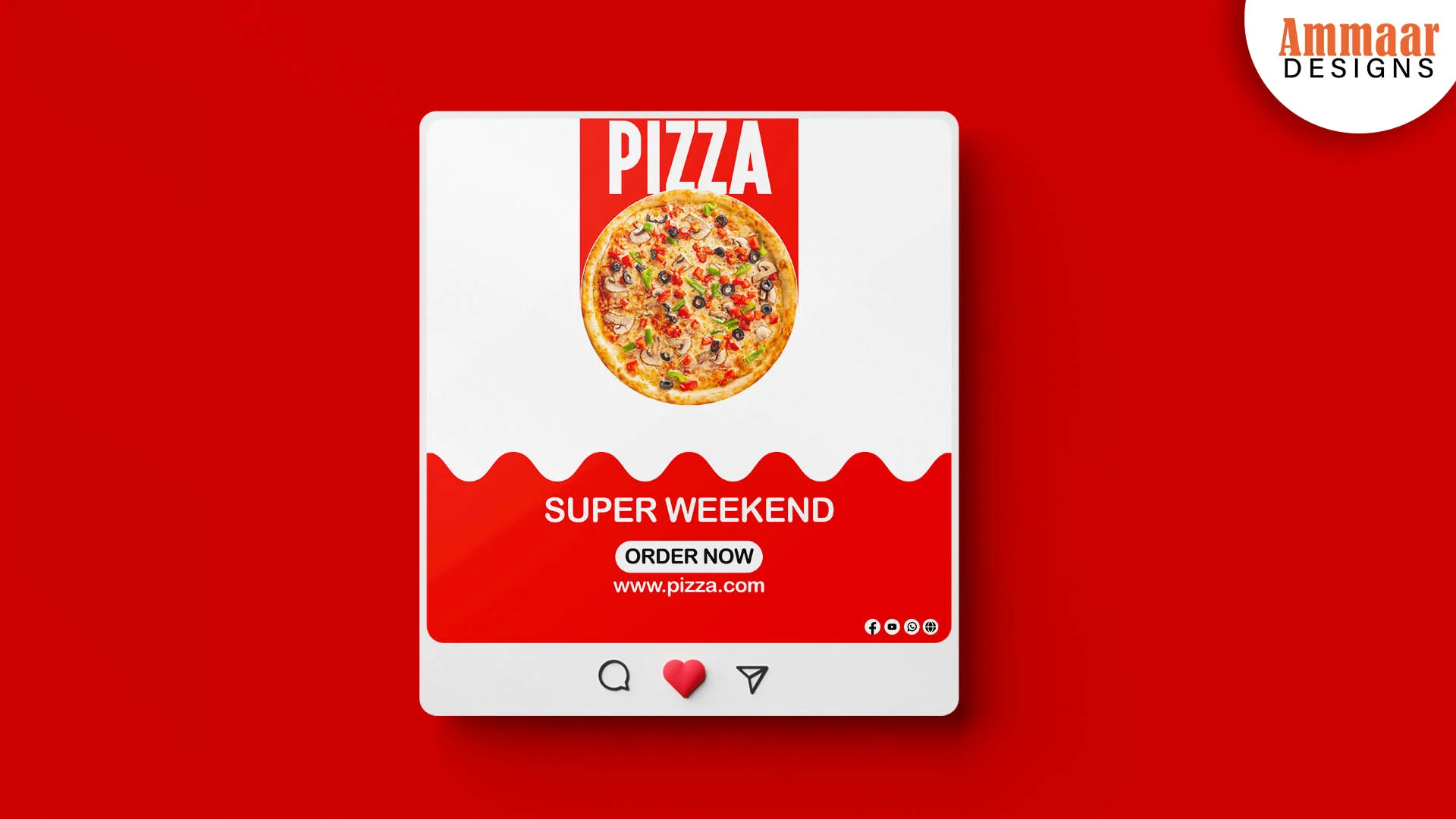
Ammaar Designs builds the strategy around the brand, not around the platforms. The logo, the colours, and the type stay the same on every post, so a customer recognises the business in one second. The posts in this guide are the proof. The Pizza Super Weekend post, the Centenarius post, and the Black Friday post all carry the same brand: one logo, one palette, one voice. A strategy without a brand is a calendar. A strategy with a brand is a business customers remember. The Social Growth package on the Social Media page runs the strategy for you. Or use the guides and run it yourself. Either way, the brand comes first.

Questions, Answered
What is the difference between a strategy and a content calendar?
A strategy decides why you post. A calendar lists what you post and when. The strategy names the goal, the customer, and the platforms. The calendar turns those decisions into 12 posts a month.
How long before a strategy works?
Three months of steady posting shows the pattern. The first month tests the pillars. The second month shows which posts earn saves and enquiries. The third month shows whether the goal moves.
How many platforms should a small business use?
One primary platform and one secondary platform. One platform done well beats five platforms done badly. Add a third platform only when the first two run without extra effort.
How much does a social media marketing strategy cost?
A strategy costs time until you add ads. The plan is free to write. The posts cost the hours to make them. Ads cost a daily budget you set. The social media marketing cost guide shows the market ranges.
Should I hire an agency or do it myself?
Do it yourself when you have time and one platform. Hire when the feed must run while you run the business. An agency brings the calendar, the design, and the reporting. Social media marketing packages bundle those into one monthly plan. The Social Media page shows what Ammaar Designs runs for you.
What is the first step?
Write the goal in one sentence. One business goal, one customer, one platform. The rest of the plan follows from those three.
What Should You Do Next?
Write the one-page plan today. Goal, customer, platforms, pillars, posting days, and the four numbers you will check. A plan on paper beats a plan in your head. Use the strategy for 90 days before you judge it. Or ask Ammaar Designs to build it with you. The Social Media service page shows what Ammaar Designs runs for you. Book a free strategy call and leave with a clear next step.
Read the marketing through social media guide next, for the channels and the posts that carry the strategy.
Ready for a Strategy That Brings Customers?
Book a free strategy call. You leave with a clear next step, whether you hire us or not.
Book a Free Strategy Call