Small Business Branding That Makes You Look Established
Your logo is not your brand. Learn what small business branding is, what a branding package includes, and how to keep it consistent.
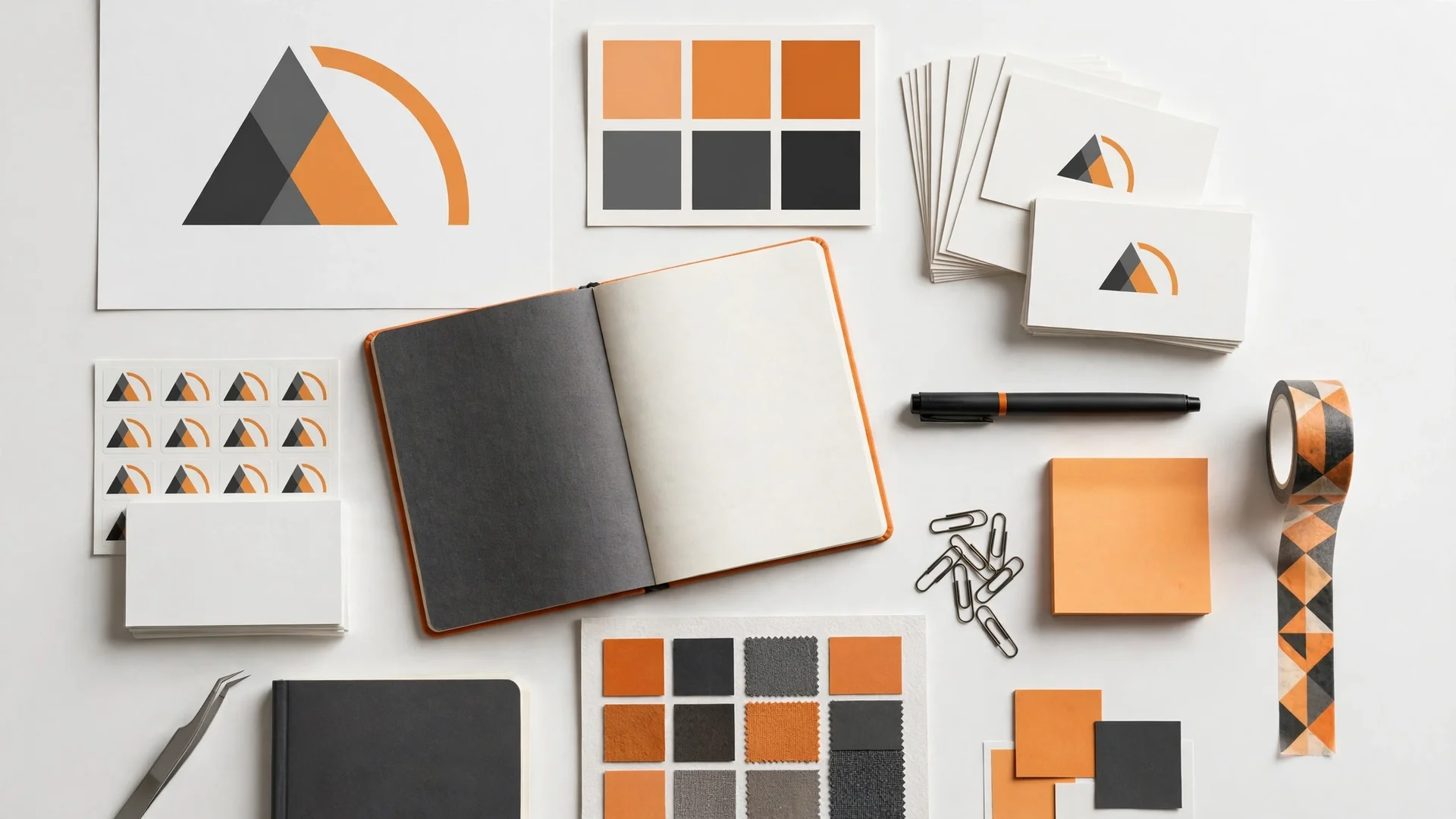
Small business branding is the system that makes your business look like one business. It is not a logo. It is the logo, the colour palette, the typography, the tone, and the guidelines, used the same way on every touchpoint. A brand makes your business look established, builds trust before a customer reads a word, and turns attention into enquiries and sales. You use it for your logo and brand identity, your social posts, your print materials, and your website. The parts are a logo system, a visual identity, and brand guidelines, in that order.
What Is Small Business Branding?
Small business branding is the visual identity your customers meet, on every surface, in the same way. It starts with a logo, then adds the colour palette, the typography, the tone, and the rules that hold them together. A brand makes your business recognisable, so customers see the same business on your card, your post, your website, and your packaging. A brand makes your business trustworthy, so customers pick you over a competitor whose brand looks unfinished.
Small business branding is not a luxury. It is the first impression your customers form, in seconds, before they read a single word. A logo that looks homemade, a post with the wrong colours, and a flyer with crowded text tell the customer your business is small, new, or not ready. A brand fixes that impression. What is the difference between a logo and a brand identity?
What Is the Difference Between a Logo and a Brand Identity?
A logo is one mark. A brand identity is the full system around that mark. A logo is the wordmark, the lettermark, the icon, or the mascot that stands for your business. A brand identity is the logo system, the colour palette, the typography, the tone of voice, and the brand guidelines, used the same way on every touchpoint. A logo alone does not make a brand. A brand identity makes the logo work, because the system around it keeps it consistent.
A logo is the first piece of a brand identity, not the whole brand. A brand identity starts with the logo, then adds the visual identity, then records the rules in brand guidelines. The visual identity is what customers see: the colours, the typefaces, the imagery, and the layout. The brand guidelines are what keeps it consistent: the clear space, the minimum size, the colour codes, and the tone. A logo without a brand identity changes from post to post, and customers see a different business each time they meet you. What does a branding package include?
What Does a Branding Package Include?
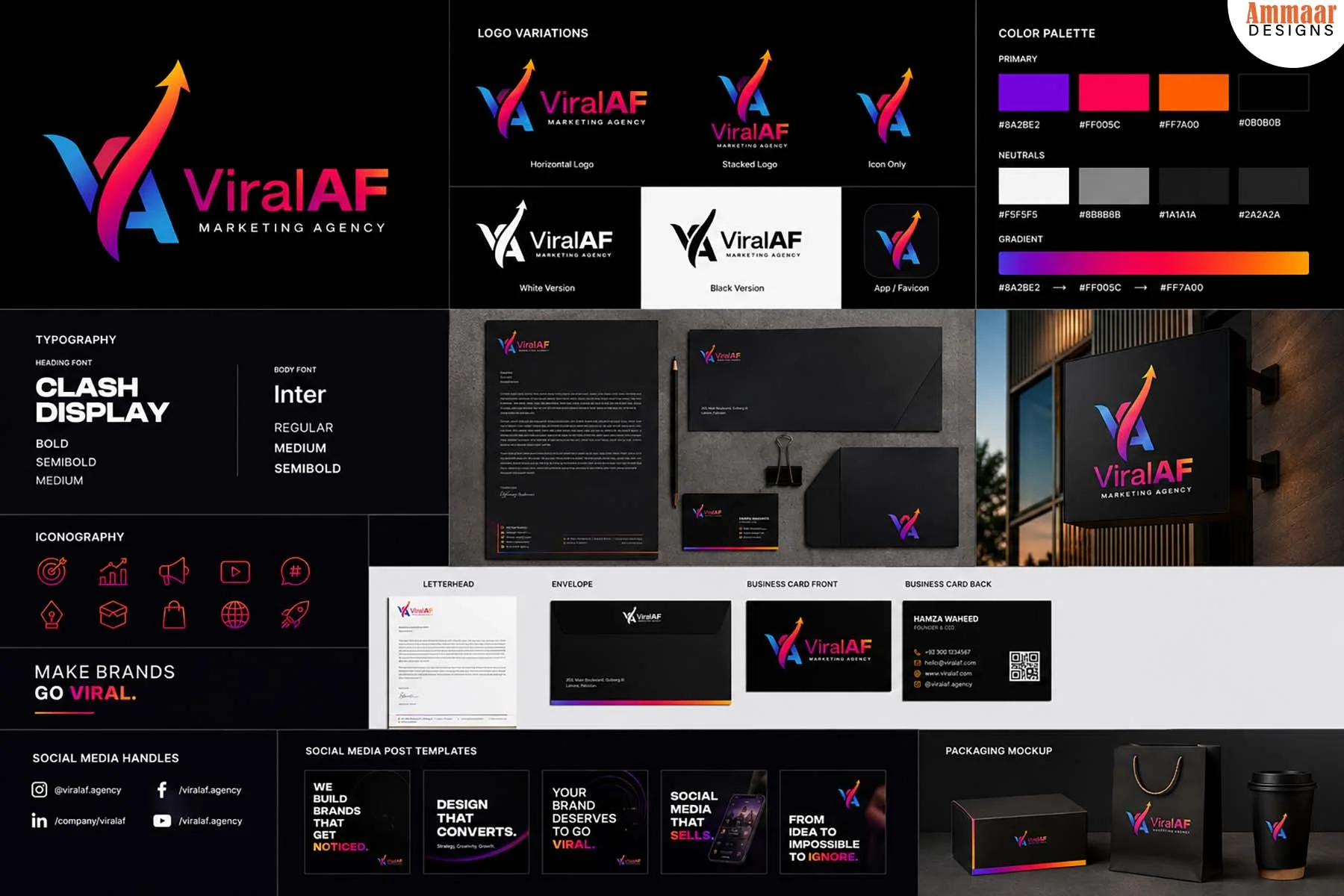
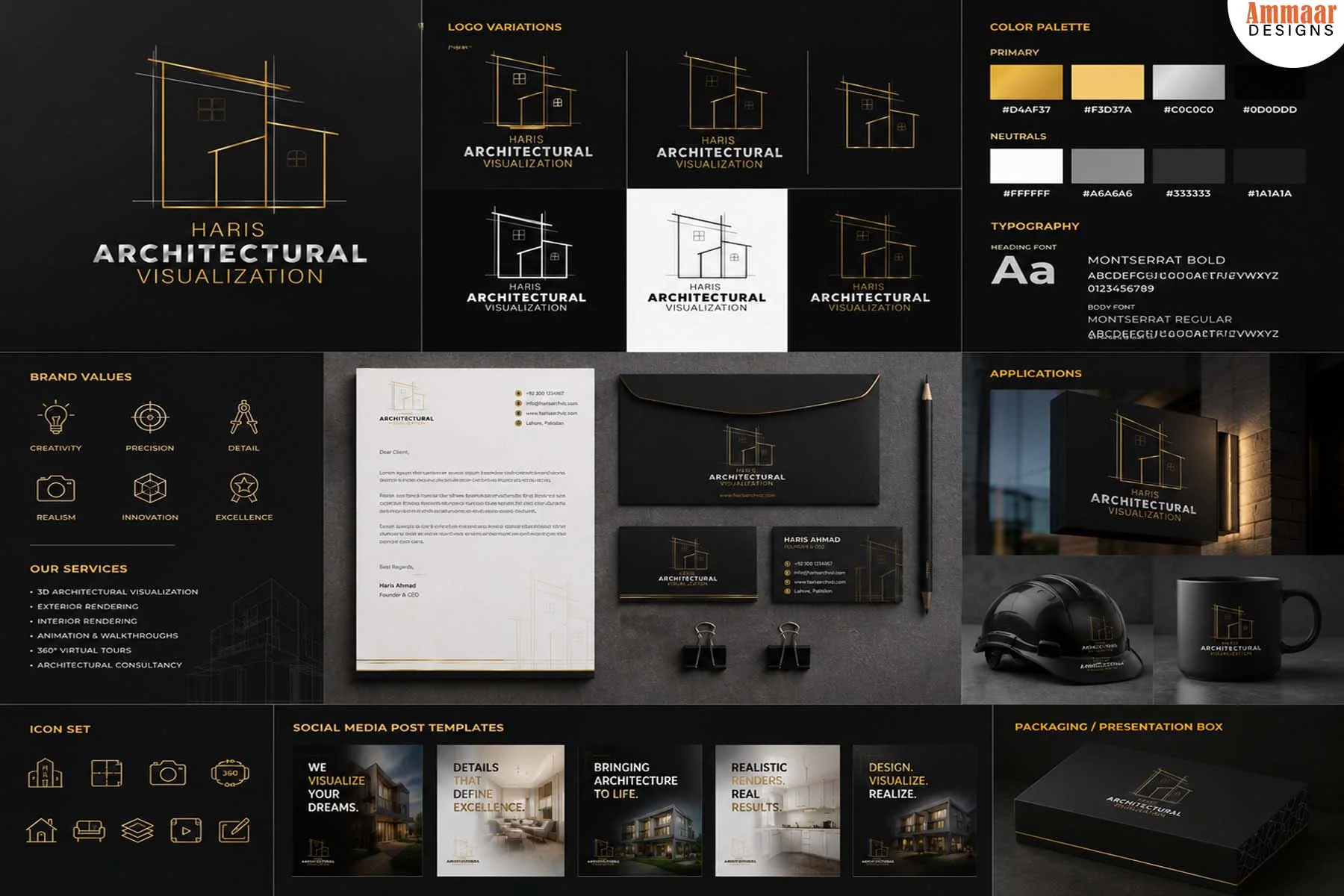
A branding package includes the logo, the visual identity, and the brand guidelines. The logo is the primary logo, the secondary logo, and the icon, with clear space and minimum size rules for each. The visual identity is the colour palette, the typography, the tone of voice, and the imagery. The brand guidelines record the rules, so your team, your printer, and your future designer use the same colours, the same typefaces, and the same logo rules.
A branding package also includes the pieces your customers hold and see: a business card, a social profile kit, and post templates. The business card carries the logo, the colours, and the contact details. The social profile kit carries the logo, the colours, and the imagery, so your profiles look like one brand. The post templates carry the logo, the colours, and the layout, so your posts look like one brand. The logo comes as a vector file, in SVG, PNG, and PDF, with a transparent background, so it works on any surface. A logo mark, an icon or a lettermark, works on a favicon and a social profile, where a full wordmark would be too small to read. A mockup shows how each piece looks in use, on a card, a sign, and a screen. What is a visual identity?
What Is a Visual Identity?
A visual identity is what your customers see when they meet your brand. It is the logo, the colour palette, the typography, the imagery, and the layout, used the same way on every touchpoint. A visual identity makes your business recognisable, so customers see the same business on your card, your post, your website, and your packaging. A visual identity makes your business trustworthy, so customers pick you over a competitor whose brand looks unfinished.
A visual identity is not a style. It is a system, with rules that hold it together. The colour palette sets the colours, with codes for print and for screen. The typography sets the typefaces, with sizes for headings and for body text. The imagery sets the photos and the illustrations, with a style that matches the brand. The tone sets the voice, with words that match the audience. The logo system sets the marks, with clear space and minimum size rules for each. How do you keep a brand consistent?
How Do You Keep a Brand Consistent on Social, Print, and Web?
You keep a brand consistent by following the brand guidelines, on every touchpoint. The guidelines set the logo, the colour palette, the typography, the tone, and the imagery, and they apply to social, print, and web in the same way. A social post uses the same logo, the same colours, and the same typefaces as a business card. A website uses the same logo, the same colours, and the same typefaces as a flyer. A brand template carries the layout, so each piece looks like the same business.
A brand stays consistent when one person, or one team, owns the guidelines. A designer builds the system, then hands over the files, the templates, and the guide, so your team uses the same brand. A brand breaks when a new designer, a new printer, or a new employee changes the colours, the typefaces, or the logo, because no one follows the guide. A brand audit finds the gaps before you rebuild, and a mockup shows how each piece looks in use. How does the Ammaar Designs brand work?
How Does the Ammaar Designs Brand Work?
The Ammaar Designs brand is a wordmark, an orange and black palette, and a clean, bold typeface, used the same way on every touchpoint. The logo is the name "Ammaar" in orange, with "DESIGNS" in black below it. The colour palette is orange, black, and white, with warm off-white for backgrounds. The typography is bold and clean, so the name stays readable at any size. The tone is plain, direct, and helpful, so the reader understands the offer without jargon.
The brand works because the system holds it together. The logo system sets the wordmark, with clear space and minimum size rules. The colour palette sets the orange, the black, and the white, with codes for print and for screen. The typography sets the typefaces, with sizes for headings and for body text. The brand guidelines record the rules, so the website, the social posts, and the stationery all look like one brand. The logo, the palette, and the typeface all follow the same system, so the brand looks like one brand on every touchpoint. What mistakes make a brand look cheap?
What Mistakes Make a Brand Look Cheap?
The most common mistake is to use a logo as a brand. A logo is one mark. A brand is the logo, the colour palette, the typography, the tone, and the guidelines, used the same way on every touchpoint. A logo without a brand identity changes from post to post, and customers see a different business each time they meet you.
Other mistakes follow the same pattern: colours that change from post to post, typography that changes from page to page, a tone that changes from friendly to formal, and a rebrand with no guidelines to follow. A brand breaks when no one owns the guidelines, because a new designer, a new printer, or a new employee changes the system. A brand audit finds the gaps before you rebuild. Should you build your brand yourself or hire a designer?
Should You Build Your Brand Yourself or Hire a Designer?
Build it yourself when you have a logo, a palette, and a template, and you need one piece. A DIY tool works for a quick post when you have a brand and a template. Hire a designer when you need the system, not a single piece. A designer builds the logo system, the visual identity, and the brand guidelines, so the brand works on every touchpoint. A designer also builds the business card, the social profile kit, and the post templates, so your team uses the same brand.
A brand is a system, not a single piece, and a system needs a designer who builds it as one. A mockup shows how each piece looks in use, before you pay for the final files. A brand guide records the rules, so your team, your printer, and your future designer use the same brand. What should you do next?
Questions, Answered
What is small business branding?
Small business branding is the system that makes your business look like one business. It is the logo, the colour palette, the typography, the tone, and the guidelines, used the same way on every touchpoint.
How much does branding cost for a small business?
It depends on the scope. A logo alone costs less than a full brand identity, and a full brand identity costs less than a rebrand with a launch. A branding package covers the logo, the visual identity, and the brand guidelines, so you pay for the scope you need.
What is the difference between a logo and a brand identity?
A logo is one mark. A brand identity is the full system around that mark. A brand identity is the logo system, the colour palette, the typography, the tone of voice, and the brand guidelines.
What does a branding package include?
A branding package includes the logo, the visual identity, and the brand guidelines. It also includes the business card, the social profile kit, and the post templates, so your team uses the same brand.
How do I keep my brand consistent?
You follow the brand guidelines, on every touchpoint. The guidelines set the logo, the colour palette, the typography, the tone, and the imagery, and they apply to social, print, and web in the same way.
Do I need brand guidelines?
Yes, if more than one person touches your brand. Brand guidelines record the rules, so your team, your printer, and your future designer use the same colours, the same typefaces, and the same logo rules.
What Should You Do Next?
Audit your brand, then fix the gaps. Look at your logo, your posts, your cards, and your website, side by side. Do they look like one business, or four? Do the colours match, do the typefaces match, and does the tone match? Write down what matches and what does not, then fix the gaps, one piece at a time. A brand audit finds the gaps before you rebuild, and a mockup shows how each piece looks in use.
Ready for a Brand That Looks Like One Brand?
Book a free strategy call. You tell us what your business does, who it serves, and what needs branding. We review the request, recommend the smallest useful scope, and confirm the deliverables, the timing, and a fixed quote. You leave with a clear next step, whether you hire us or not.
Book a Free Strategy Call