Logo vs Brand Identity
A logo is one mark. A brand identity is the system around it. Learn the difference, so you buy the one your business needs first.
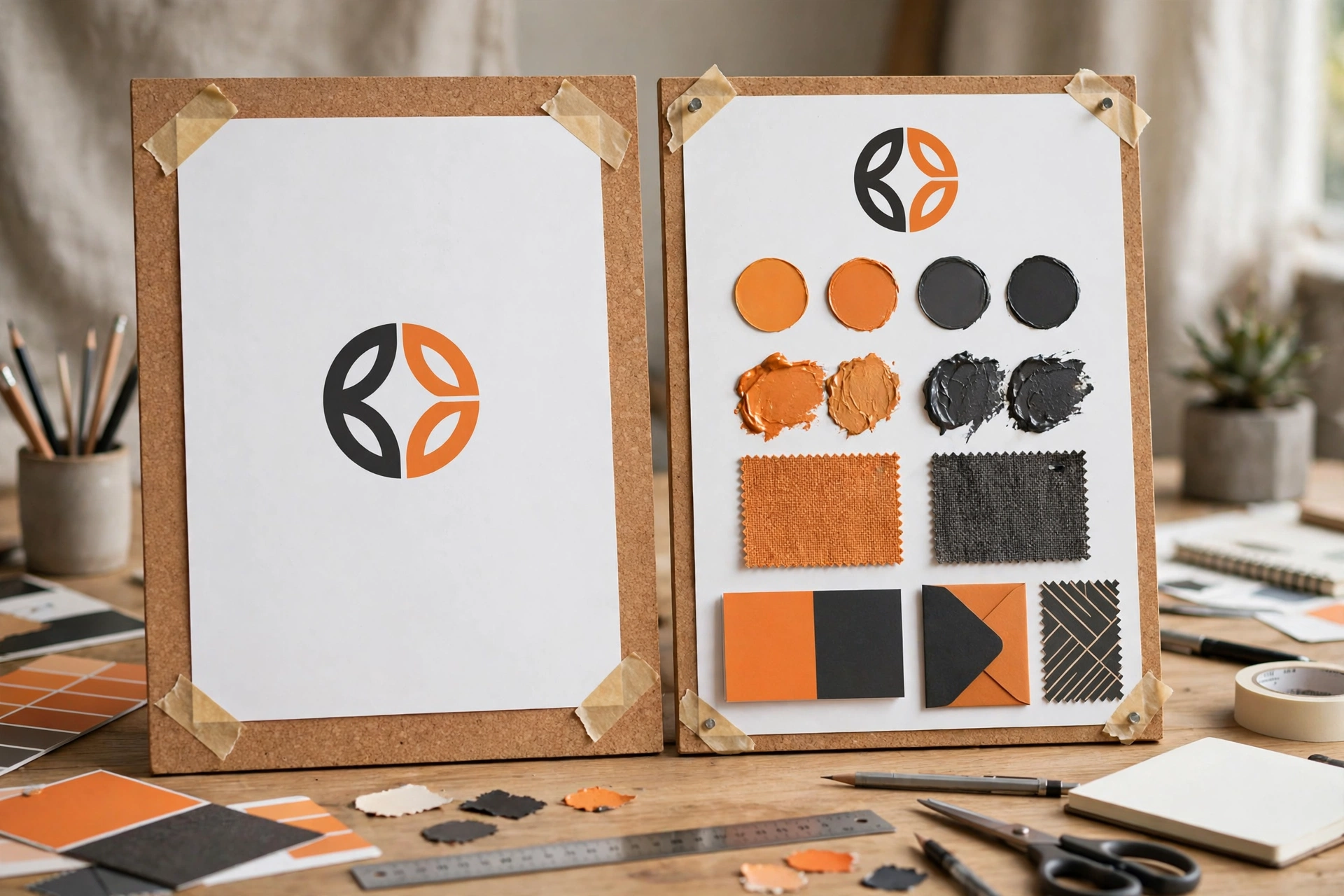
A logo is one mark. A brand identity is the system around that mark: the logo variations, the colour palette, the typography, the tone, and the rules that hold them together. This guide explains what each one is, how they differ, what a brand identity includes, when a logo is enough, and when your business needs the full identity.
What Is a Logo?
A logo is the mark customers use to recognize your business. It is one symbol, one wordmark, or one combination of the two. A wordmark is the business name in a distinct typeface. A lettermark is the initials of the name. An icon is a symbol on its own. A combination mark pairs the icon with the wordmark.
A logo does one job: recognition. A customer sees the mark on a card, a post, or a sign, and knows it is your business. A logo does not carry the colours, the type, the tone, or the rules. Those belong to the identity. What does a brand identity add?
What Is a Brand Identity?
A brand identity is the full visual system built around the logo. It includes the logo system, the colour palette, the typography, the imagery, the tone of voice, and the brand guidelines that record the rules. The visual identity is the look of that system: logo, colours, type, and imagery, used the same way on every piece.
A brand identity does the job a logo cannot do on its own: it makes every piece look like the same business. Your card, your post, your website, and your packaging all carry the same palette, the same type, and the same tone. A logo is the mark. A brand identity is the business, made visible. How do the two differ in practice?
How Does a Logo Differ From a Brand Identity?
A logo is a part. A brand identity is the whole. The logo is the mark. The identity is the mark, the variations, the colours, the type, the imagery, the tone, and the rules. A logo takes days to design. A brand identity takes weeks, because it covers every piece your business uses.
A logo answers one question: what is the mark? A brand identity answers the questions that follow: what colours go with the mark, what type goes with the name, what tone do the words use, and what rules keep it all the same? A business with a logo and no identity has a mark that changes from piece to piece. A business with an identity has a mark that stays the same. What does the identity include?
What Does a Brand Identity Include?
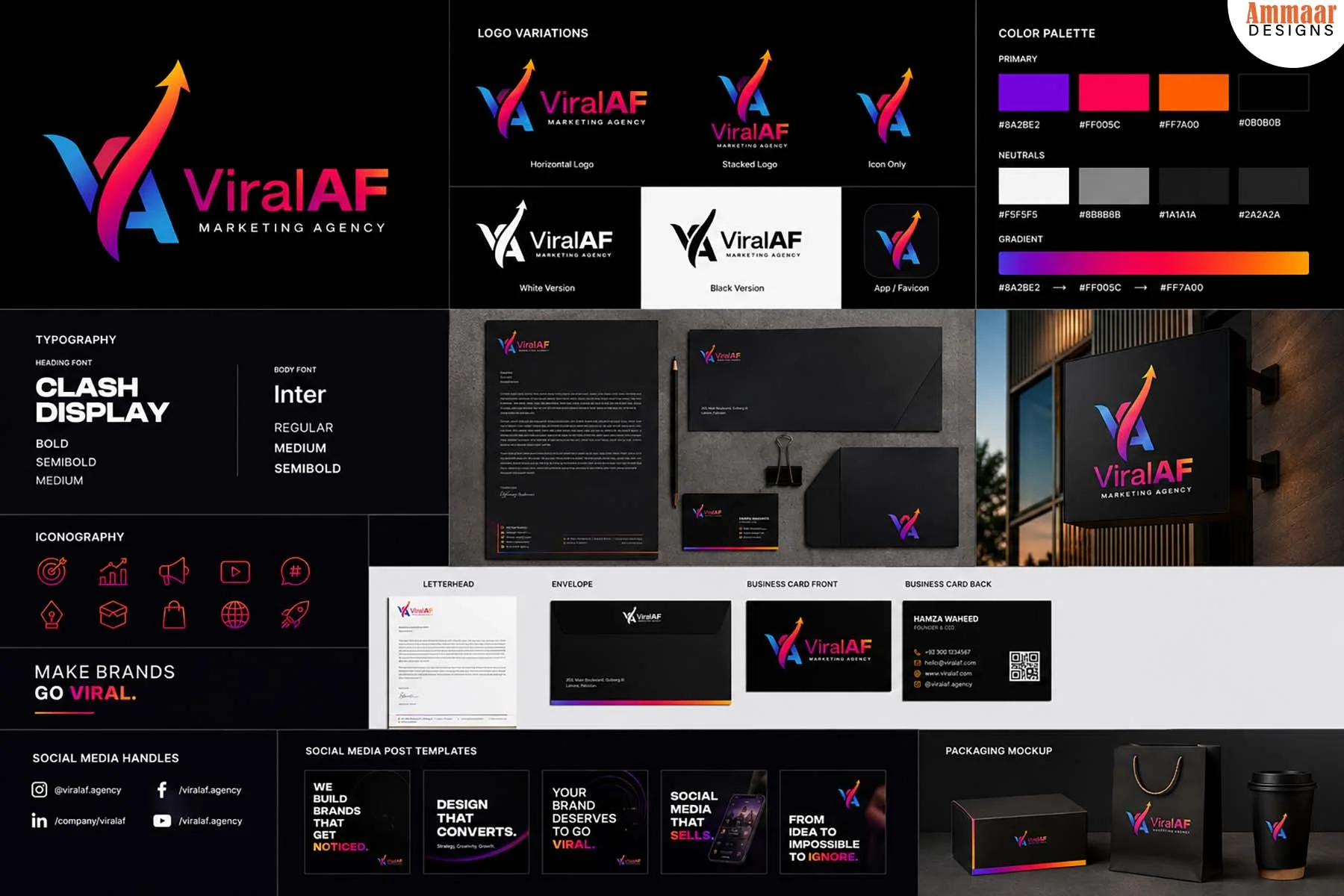
A brand identity includes 6 parts. The logo system is the mark in its variations. The colour palette is the set of colours the brand uses, with the codes for print and screen. The typography is the font family for the name and the tagline, with the sizes and the weights. The imagery is the style of photos and graphics the brand uses. The tone of voice is the way the brand writes: the words it uses and the words it avoids. The brand guidelines record all of it in one document.
Each part serves the same goal: one business, seen the same way in every place. The palette keeps the colours the same from post to post. The typography keeps the type the same from page to page. The tone keeps the words the same from caption to caption. The guidelines keep the parts the same when a new designer or printer takes over. When is a logo enough on its own?
When Is a Logo Enough?
A logo is enough when your business has one place to appear and one job to do. A market stall with a sign, a freelancer with a business card, a new business testing its name: each one needs a mark customers can recognize, and nothing more yet. A logo is also enough when the budget covers the mark now and the system later, as long as you build the system before the mark spreads.
A logo stops being enough when the business grows past one place. A second channel, a second product, or a second person making posts each add a place where the mark must stay the same. A logo with no identity cannot stay the same across those places. When does the business need the full identity?
When Do You Need a Full Brand Identity?
You need a full brand identity when your business appears in more than one place. A website, a social feed, a menu, a sign, and a business card are 5 places, and each one shows the brand to a customer who has not met you yet. An identity keeps those 5 places looking like one business. You also need an identity when more than one person makes materials for the brand: a designer, a printer, a social media manager. The guidelines give each of them the same rules.
An identity also matters when the business wants to look established. A customer compares your brand with the competitor's brand, and the brand that looks like one business wins the trust. A logo alone cannot win that comparison. How does the Ammaar Designs identity work?
How Does the Ammaar Designs Brand Identity Work?
The Ammaar Designs brand identity is a wordmark, a palette, a type, and a tone, used the same way on every piece. The name Ammaar sits in orange, DESIGNS in black, in one font family. The orange is #E96632, the black is the brand's second colour, and the two colours carry the whole identity: logo, posts, website, and stationery all use the same pair.
The tone is plain and direct: short sentences, no filler, one idea per line. The brand guidelines record the logo rules, the colours, the type, and the tone, so every piece the agency makes looks like the same business. That is the difference between a logo and a brand identity, in practice: the logo is the mark, and the identity is everything the mark needs to stay the same. What mistakes do small businesses make here?
What Mistakes Do Small Businesses Make?
Five mistakes, each with a fix. Calling a logo a brand. A logo is one mark, and a brand is the system around it. The fix is the identity: build the parts, not just the mark. Buying a logo and skipping the guidelines. A mark with no rules drifts the first time someone else uses it. The fix is a one-page guideline with the colours, the fonts, and the logo rules. Changing colours from post to post. A palette that changes with the mood is not a palette. The fix is one palette, used the same way on every piece. Using a different font on each page. Type that changes from page to page looks like a different business. The fix is one font family for the name and one for the tagline. Hiring a new designer with no brief. A designer with no guidelines invents a new brand. The fix is the guidelines document, handed over before the work starts.
Each mistake has the same cause: the business bought the mark and skipped the system. The system is what keeps the mark the same. Should you start with a logo or a brand identity?
Should You Start With a Logo or a Brand Identity?
Three questions decide it: places, people, and budget. Places: how many places does your brand appear in? People: how many people make materials for your brand? Budget: what can you spend now, and what can you spend next? A business with one place and one person starts with a logo and builds the identity next. A business with 5 places and 3 people starts with the identity, because the logo alone cannot hold those places together.
The Logo Design page shows the logo package, and the Brand and Creative page shows the full identity package. The Branding Cost Estimator tool shows what a branding scope includes before you book a call. Which route fits your business?
Questions, Answered
What is the difference between a logo and a brand identity?
A logo is one mark. A brand identity is the system around that mark. The identity includes the logo system, the colour palette, the typography, the imagery, the tone of voice, and the brand guidelines.
Is a logo the same as a brand?
No. A logo is the mark customers use to recognize your business. A brand is the logo, the identity, the offer, and the experience, taken together. A logo is one part of the brand.
Do I need a brand identity if I already have a logo?
Yes, when your business appears in more than one place. The identity keeps the logo, the colours, and the type the same on your card, your post, your website, and your sign.
What is visual identity?
Visual identity is the look of the brand identity: logo, colours, type, and imagery, used the same way on every piece. It is the visual part of the full brand identity, which also includes tone and rules.
How much does a brand identity cost?
It depends on the scope, so a designer gives you a fixed quote before work starts. The scope covers the logo system, the palette, the typography, the imagery, the tone, and the guidelines. The Branding Cost Estimator tool shows what a scope includes.
Can I build a brand identity in Canva?
Canva builds a quick version, not a full identity. A free tool gives you a raster image, not a vector master, and it has no brand guidelines built in. A vector tool builds the finished identity.
What Should You Do Next?
Count the places your brand appears, and the people who make materials for it. One place and one person means a logo is enough for now. More than one place or more than one person means you need the identity, and the guidelines that hold it together. The Brand and Creative service page shows the full identity package. Book a free strategy call and leave with a clear next step.
Read the Brand and Creative Guides next, for the logo system and the brand guidelines template.
Ready for a Brand That Looks Like One Brand?
Book a free strategy call. You leave with a clear next step, whether you hire us or not.
Book a Free Strategy Call